join the newsletter to Turn your paycheck into passive income

SaaS Portfolio Builder
Build your SaaS portfolio with the best services and platforms we recommend.
Building a SaaS Portfolio
SaaS (Software as a Service) is the modern gold standard for recurring revenue. Unlike one-time sales, SaaS customers pay monthly or annually—creating predictable income that grows over time. The best part? You don't need to be a programmer to build a SaaS portfolio.
On this page, I've curated the exact resources I use (or would recommend to a close friend) to build or acquire SaaS assets without writing code or quitting your day job. Every service listed here has been vetted for two things: high quality and a low learning curve. Whether you want to buy an existing SaaS, build a no-code solution, or invest in software businesses, there's a path for you.
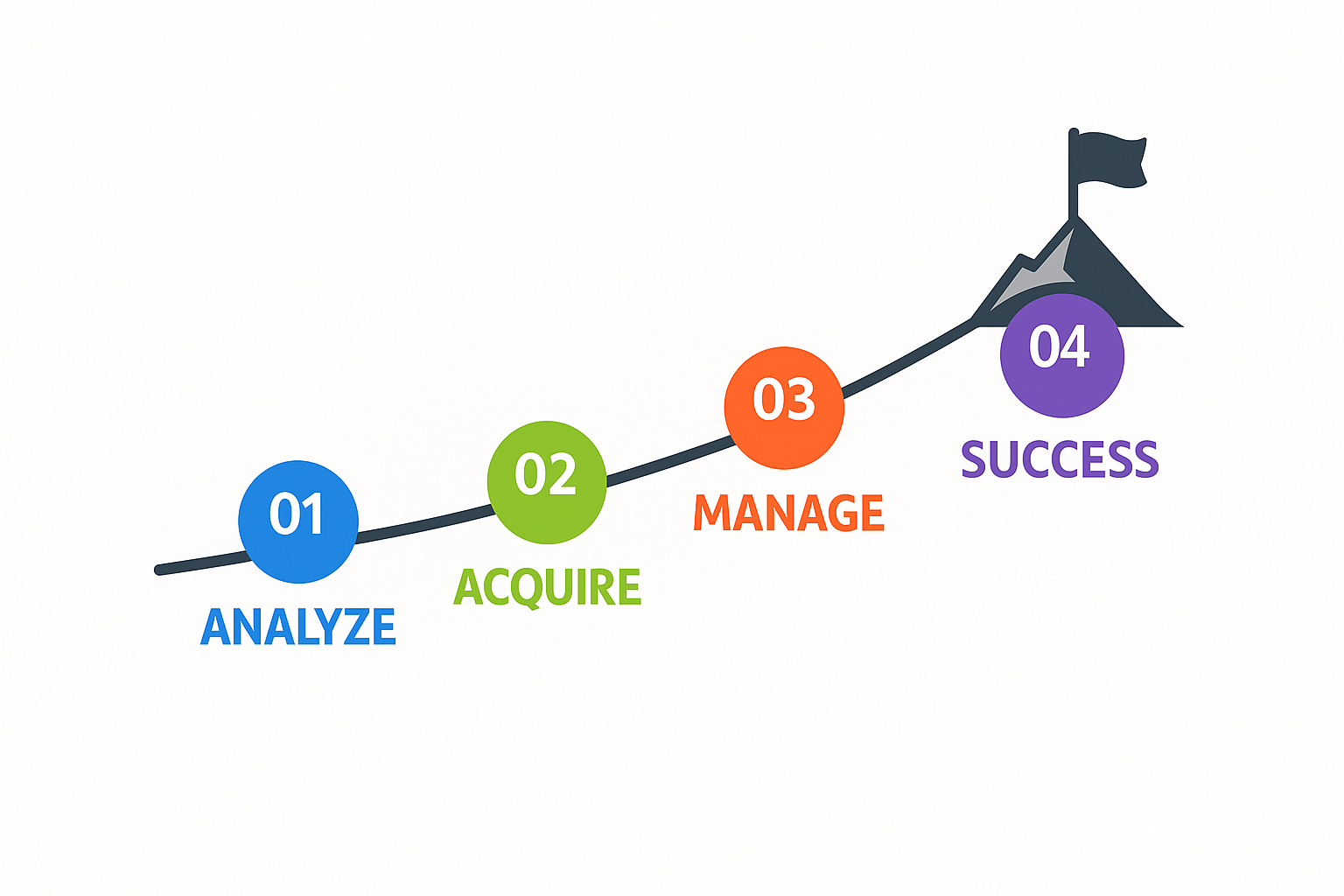
My goal is to help you tap into the most lucrative form of digital income. A single SaaS product with 100 customers paying $50/month generates $5,000/month in recurring revenue—and that scales. To get started, follow the three steps below:
Note: Some links on this page are affiliate links. I only recommend tools I personally trust to help you build long-term wealth. You can view our full terms and conditions.
Identify high-potential opportunities and validate your strategy.
Secure your assets or build them from scratch using the best-in-class platforms.
Oversee your progress and automate your passive income flow.
Step 1. Analysis & Evaluation
The Goal: To find SaaS opportunities with proven demand and evaluate whether they're worth your time and capital.
Most first-time SaaS builders fail because they build what they think is cool instead of what people actually pay for. And most SaaS buyers overpay for businesses with hidden churn problems. This step is about validating demand, analyzing metrics, and finding opportunities that others miss.
Whether you're evaluating a SaaS to buy, researching a problem to solve, or analyzing a no-code tool to build with, you need data. The tools below help you identify market gaps, evaluate existing SaaS businesses, and validate your assumptions before you commit.
What to evaluate:
Market research: What problems do people pay monthly to solve? Where are the gaps?
Acquisition analysis: For existing SaaS, what's the MRR, churn rate, and growth trajectory?
Competition analysis: Who else solves this problem, and how can you differentiate?
Technical feasibility: Can this be built with no-code tools, or does it require custom development?
Step 2. Acquisition & Development
The Goal: To acquire an existing SaaS or build your own using the most efficient path.
You have three paths to SaaS ownership: buy an existing product, build with no-code tools, or hire developers. Each has trade-offs. Buying is fastest but requires capital. No-code is accessible but has limitations. Custom development is most flexible but slowest.
This step covers all three paths, with emphasis on approaches that work for employed people who can't code 8 hours a day. The right choice depends on your skills, budget, and timeline—but any path can lead to recurring revenue.
How to acquire or build:
Buy existing SaaS: Marketplaces, brokers, and due diligence for acquisitions
No-code building: Platforms that let you build functional SaaS without programming
Development resources: Hiring developers, agencies, or using AI tools to accelerate
Validation before scaling: Testing with early users before investing heavily
Step 3. Manage & Monitor
The Goal: To track the metrics that matter and grow your MRR without micromanaging daily operations.
SaaS businesses live and die by their metrics. MRR (Monthly Recurring Revenue), churn rate, customer acquisition cost, and lifetime value tell you whether you're building wealth or slowly bleeding money. This step is about setting up dashboards and systems so you always know where you stand.
The best SaaS owners focus on improving one metric at a time: reduce churn, increase prices, improve conversion, or lower acquisition costs. The tools below give you visibility into your numbers and help you grow systematically.
What to monitor:
Revenue metrics: MRR, ARR, growth rate, and revenue trends
Churn analysis: Who's leaving, why, and how to reduce it
Customer feedback: What users want and what would make them pay more
Automation: Support, onboarding, and billing systems that scale
Continue learning with these in-depth articles:
Check out the other portfolio builders:
CheatCode Wealth™
Build your wealth. Keep your life.
© 2025. All rights reserved. Cheatcode Wealth LLC. This webpage may contain paid affiliate links.